How to Choose the Right Chromatography Column for Your Experiments?
Choosing the right chromatography column is crucial for successful experiments. According to Dr. Emily Carter, a leading expert in chromatographic techniques, “The right column can change the game for your separation processes.” A chromatography column is not just a tool; it’s the backbone of analytical chemistry.
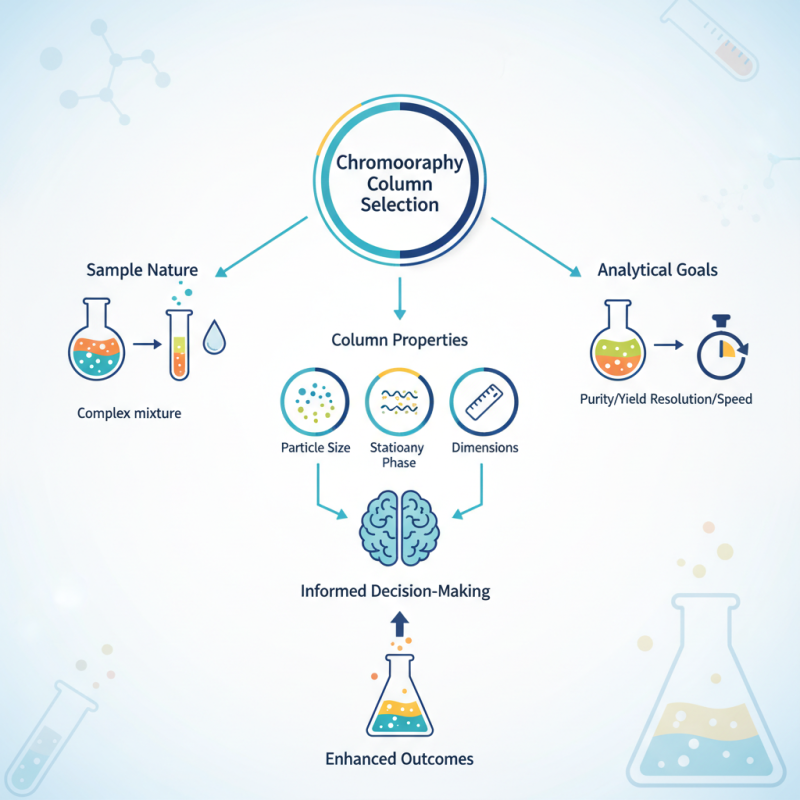
Selecting the appropriate column influences the purity and yield of your results. Different columns offer various particle sizes, stationary phases, and dimensions. These factors can significantly impact resolution and speed. Understanding your specific requirements is essential. Reflect on the nature of your samples. Are they complex mixtures or simpler compounds?
Experience shows that many researchers underestimate the importance of column selection. They often choose based on convenience rather than analytical needs. Think critically about your choices. What worked previously might not work again. An informed decision can lead to enhanced outcomes. This exploration will guide you through choosing the right chromatography column, enhancing your experiments in meaningful ways.
Understanding the Basics of Chromatography Columns
When selecting a chromatography column, understanding its fundamental components is crucial. Chromatography columns come in various sizes and materials. They are designed for different types of separation processes. The stationary phase inside the column can significantly impact the outcome of your experiment. It’s essential to choose one that aligns with the characteristics of your target compounds.
Consider the nature of your samples. Are they polar or non-polar? The column's polarity should match your sample's properties for optimal separation. Think about the particle size in the stationary phase as well. Smaller particles improve resolution but can lead to higher back pressure. Sometimes, that balance may not be worth the trade-off. Each experiment can present its own unique challenges, making it necessary to adapt your approach accordingly.
Moreover, the flow rate plays an integral role in chromatography. Too fast may compromise separation; too slow can increase run times unnecessarily. Finding the right medium, whether it’s silica gel or polymer-based, is not a one-size-fits-all approach. It requires careful consideration and prior knowledge. Not every column performs well for every application. Constantly reflect on your past experiments to refine your future choices.
Identifying Your Experimental Goals and Requirements
Choosing the right chromatography column starts with understanding your experimental goals. Identify what you aim to achieve. Are you separating compounds? Analyzing purity? Each goal requires a specific column type. For instance, reversed-phase columns work well for non-polar substances. However, your choice may not always be clear-cut. Identifying your target analytes is crucial here.
Consider the physical and chemical properties of your samples. Their polarity, size, and charge will influence your decision. For example, a highly polar analyte may need an ion-exchange column. Assessing the sample's concentration is also important. Too high a concentration can lead to column overload. Always evaluate these factors carefully.
Experimenting with different columns can also yield insights. You may find that a column doesn’t perform as expected. This reflection is vital for improving your methodology. Learning from mistakes often leads to better outcomes. In chromatography, patience and adaptability are key assets. Balancing your requirements with the column's capabilities is essential for success.
Evaluating Different Types of Chromatography Columns
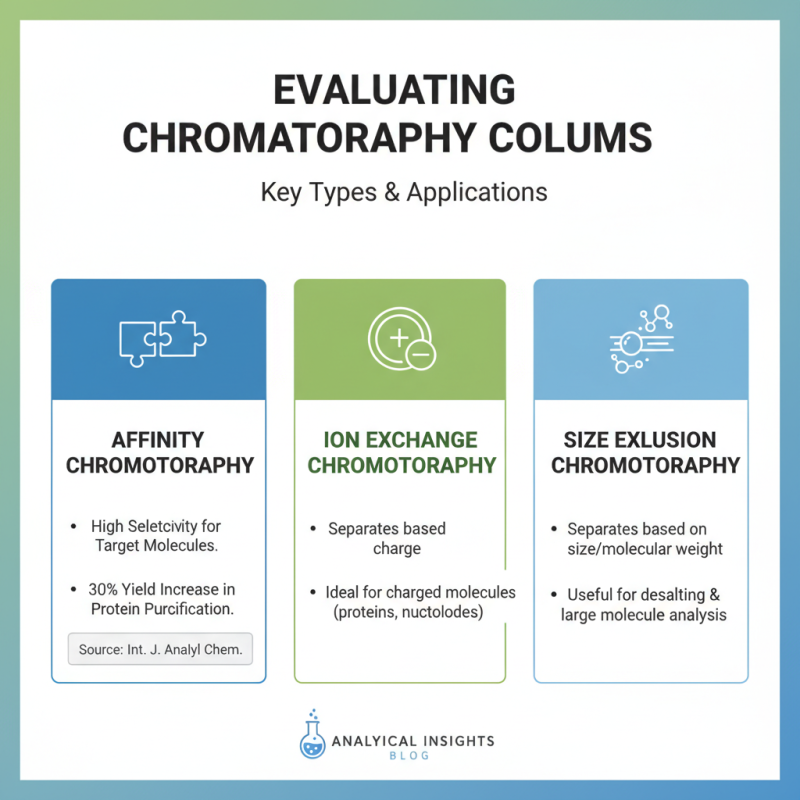
When selecting a chromatography column, understanding the different types available is crucial. Each type, whether it's affinity, ion exchange, or size exclusion, serves specific applications. For instance, a report from the International Journal of Analytical Chemistry highlights that affinity columns have a high selectivity for target molecules. They can improve yield by 30% in protein purification processes.
The choice of resin is essential. Different resins provide varying separation efficiencies. For example, a recent study indicated that high-performance liquid chromatography (HPLC) columns with C18 resins are widely used in pharmaceutical analysis. They offer reliable retention times and excellent peak shapes. However, these columns may not be suitable for all sample types. Adjusting the pH or ionic strength of the mobile phase can lead to inconsistent results.
A common oversight in column selection is overlooking the scale of your experiments. Many labs use a single column type without considering the scale of their applications. A mismatch can result in lower purification levels and increased costs. Proper evaluation before purchase is essential. Understanding your specific needs can lead to more effective experiments and better data reliability.
Factors to Consider When Selecting a Chromatography Column
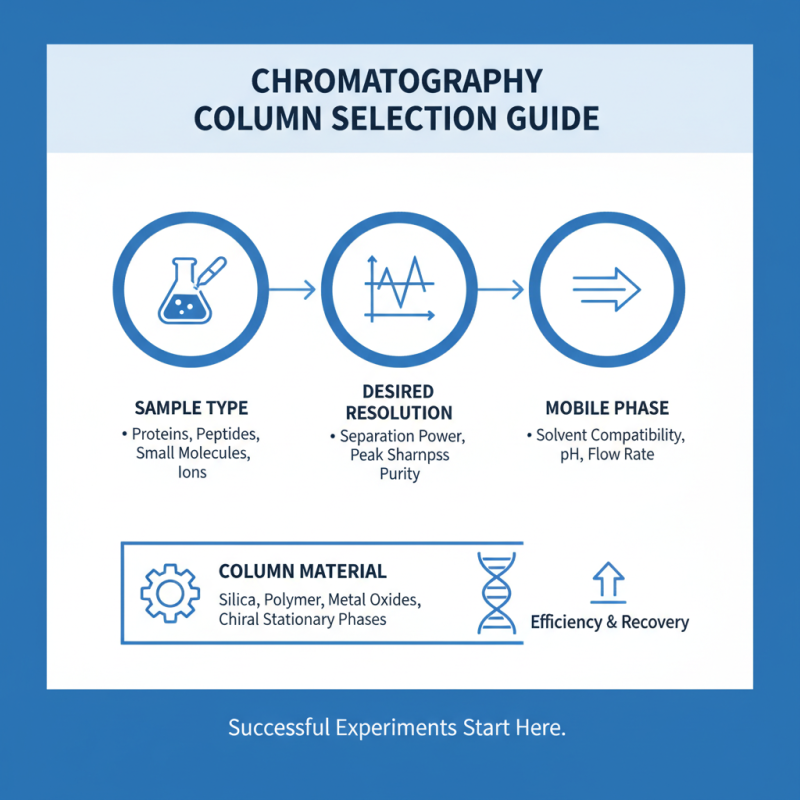
Choosing the right chromatography column is crucial for successful experiments. When selecting a column, consider factors such as the type of sample, desired resolution, and the mobile phase. The column's material can dramatically affect results, influencing both separation efficiency and sample recovery.
One important aspect is column dimensions. A longer column may improve resolution but can increase analysis time. Shorter columns are faster but may sacrifice separation quality. Think about your specific needs.
Tips: Ensure that you match the column’s particle size with the intended application. Smaller particles can lead to better separations but require higher pressure.
Another major factor is the stationary phase. Different stationary phases interact differently with various compounds. Understanding the chemistry involved is key. Not all phases will work for all substances.
Tips: Test several stationary phases to see which yields the best results for your samples. Document your findings to refine future choices. Sometimes, even minor adjustments can lead to more effective separations.
Maintaining and Optimizing Your Chosen Chromatography Column
Maintaining and optimizing your chromatography column is crucial for accurate results. Regular inspection is key. Check the pressure readings and monitor the baseline. A sudden spike may indicate a blockage or contamination. Early intervention can save time and resources.
Cleaning the column periodically can enhance performance. Use appropriate solvents to flush out residues. However, over-cleaning might lead to wear and tear. It's important to strike a balance between maintenance and the longevity of the column. Documenting these cleaning cycles can also provide valuable insights for future experiments.
Additionally, consider the inject volume and sample quality. Overloading the column can lead to poor separation and distorted peaks. If a pattern emerges with results, it may warrant a re-evaluation of sample preparation techniques. Staying observant and reflecting on your workflow can lead to improved outcomes and better understanding.
Usage of Different Chromatography Columns in Experiments