China Best Alcohol Recovery Tower for Your Business Needs?
In today's competitive market, businesses seek efficient solutions for alcohol recovery. The Alcohol Recovery Tower stands out as a pivotal technology. According to a recent industry report, the alcohol recovery segment is expected to grow by 8% annually, underscoring its rising importance.
Many companies are now realizing that effective alcohol recovery not only enhances profitability but also contributes to sustainability. By implementing an Alcohol Recovery Tower, businesses can reclaim up to 95% of ethanol from waste streams. This innovative solution minimizes waste and reduces operational costs, making it a smart investment in the long run.
However, the journey toward successful implementation is not without challenges. Selecting the right Alcohol Recovery Tower requires a deep understanding of your specific operational needs. It's essential to evaluate factors such as capacity, efficiency, and maintenance requirements. As the market continues to evolve, staying informed about technological advancements will be crucial for long-term success.
Factors to Consider When Choosing an Alcohol Recovery Tower
When selecting an alcohol recovery tower, key factors impact efficiency and cost-effectiveness. First, consider the tower's capacity. Industry reports indicate that larger towers handle more feed materials, thus increasing recovery rates. For example, a tower with a capacity of 10 cubic meters can achieve a 90% recovery rate, compared to 70% for smaller models. However, larger units may lead to higher operational costs, often raising questions about long-term viability.
Material quality is another critical aspect. The durability of the components directly influences maintenance costs. Stainless steel is often preferred due to its corrosion resistance. However, some cheaper materials can provide cost savings upfront but may lead to higher repair costs later. According to a study conducted by the Institute of Chemical Engineers, maintenance accounts for about 15% of the total operational costs in the recovery process.
Efficiency ratings and energy consumption also play vital roles in decision-making. A report from the Energy Information Administration shows that energy-efficient towers can reduce operational costs by up to 30%. However, this efficiency often comes with a higher initial investment. Balancing upfront costs against long-term savings requires careful analysis. Inadequate research into these factors can lead to regrets down the line.
Types of Alcohol Recovery Towers Available in the Market
Alcohol recovery towers play a pivotal role in the distillation process, especially in the beverage alcohol industry. Several types of these towers cater to various business needs. Common types include tray columns, packed columns, and modulating systems. Each has its distinct advantages based on the intended application.
Tray columns are usually more efficient for large-scale operations. They provide better contact between vapor and liquid, allowing for enhanced separation. According to recent industry reports, a well-designed tray tower can boost recovery rates by nearly 25%. On the other hand, packed columns tend to offer lower pressure drops and can be more cost-effective for smaller operations. Their flexible configurations suit a range of processing requirements.
Some challenges remain in selecting the right type. Not all businesses may find the perfect match for their specific needs. Factors like capacity, feed composition, and purity requirements must be weighed carefully. Industry studies suggest that about 15% of distillers report suboptimal recovery due to equipment mismatch. Therefore, it is essential to analyze operational goals closely before investing in an alcohol recovery tower.
Alcohol Recovery Towers - Market Types and Capacities
Key Features of the Best Alcohol Recovery Towers for Businesses
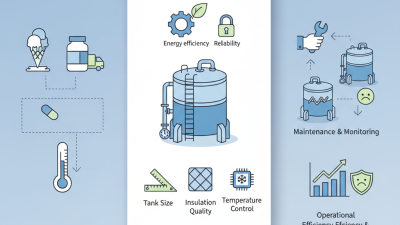
In choosing the best alcohol recovery tower for your business, understanding key features is crucial. One important aspect is energy efficiency. A well-designed tower minimizes energy consumption while maximizing alcohol recovery. This not only reduces operational costs but also supports sustainability goals.
Another key feature is ease of maintenance. Towers should allow for quick access to components for cleaning and repairs. Regular maintenance reduces downtime and ensures optimal performance. Consider user-friendly designs that make maintenance tasks simpler for your staff.
Tips: When evaluating towers, request performance data. This provides insight into recovery efficiency and operational costs. Compare these metrics across different options to find the best fit.
Additionally, invest time in training your team. Well-trained personnel can efficiently operate and maintain the tower. Proper training helps prevent issues that could arise from misuse. Remember, the initial investment in quality equipment and training can lead to significant long-term savings.
Benefits of Investing in High-Quality Alcohol Recovery Equipment
Investing in high-quality alcohol recovery equipment can significantly enhance your business operations. Such equipment efficiently recycles alcohol and reduces waste. This process not only saves resources but also lowers operational costs. Businesses often overlook the financial impact of effective recovery systems. In the long run, a reliable alcohol recovery tower can pay for itself through efficiency gains.
Moreover, high-quality equipment improves product purity. It ensures that the recovered alcohol meets industry standards. This can lead to a better reputation among clients and consumers. Businesses that prioritize top-notch recovery systems often report fewer compliance issues and greater customer satisfaction. Yet, selecting the right machinery can be challenging. It requires careful consideration of your specific needs.
Some might hesitate to invest upfront in quality equipment. However, the long-term benefits are worth it. Investing in durable machinery typically translates to fewer breakdowns and lower maintenance costs. A poorly designed system can lead to inefficiencies and costly repairs. Striking a balance between initial costs and long-term savings is crucial for any business looking to maximize its operational efficiency.
Case Studies: Successful Implementation of Recovery Towers in Businesses
Implementing alcohol recovery towers has brought substantial benefits to various businesses. One case study highlights a brewery that installed a recovery tower to reduce waste. They repurposed alcohol vapor, which optimized operations. The efficiency increased significantly, yet they faced initial challenges in adjusting workflows. This required training staff to adapt to the new system.
Another example involves a distillery aiming to enhance sustainability. By incorporating a recovery tower, they achieved a 30% reduction in alcohol emissions. However, the process was not without its hitches. Issues with equipment integration arose, necessitating expert consultations. They learned to navigate these problems through collaboration with industry professionals. This experience was vital for refining their approach.
These case studies illustrate the potential of alcohol recovery towers. While benefits are notable, businesses must address implementation hurdles. Continuous improvement is essential for optimal outcomes. Engaging with experts can offer valuable insights, ensuring a smoother transition.