Top 10 Asme Pressure Vessel Design Considerations for Safety and Efficiency?
In the realm of industrial safety, "Asme Pressure Vessel" design is critical. Experts like Dr. Emily Chen, a renowned authority in pressure vessel engineering, often emphasize the importance of safety. She states, “A pressure vessel is only as safe as its design allows.” This highlights the need for rigorous considerations in their design.
The design of pressure vessels involves complex factors that ensure both safety and efficiency. Each aspect, from material selection to stress analysis, plays a role in the reliability of these vessels. Since the consequences of design failures can be catastrophic, engineers must navigate various challenges. Understanding the intricate balance between operational efficiency and safety standards is essential.
In this exploration of the top ten design considerations, we will delve into critical aspects. The stakes are high, and the pressure is not just from the materials contained within these vessels. It is a matter of public safety, regulatory compliance, and operational effectiveness. The discussions ahead will uncover essential insights and prompt reflection on existing practices within the industry.
Key Factors in ASME Pressure Vessel Design for Safety
When designing ASME pressure vessels, safety is paramount. Engineers must prioritize robust materials and accurate calculations. Each vessel should endure pressure without failure. Alongside this, maintenance must be planned. Regular inspections help identify potential weaknesses. This proactive approach can prevent catastrophic accidents.
Tips: Always select materials that fit specific environmental conditions. Corrosion-resistant materials often enhance longevity. Consider the vessel's operating temperature and pressure.
Design configurations play a crucial role. Curved shapes distribute stress evenly. Flat surfaces can lead to weak points. Moreover, proper welding techniques are vital. Poor welds can create failure risks. Regular welding inspections ensure structural integrity.
Tips: Use simulation tools to predict vessel performance. These tools help visualize potential issues before they arise. Collaborate with experienced engineers in the design phase. Their insights can refine the final design.
Material Selection: Balancing Strength and Corrosion Resistance
Material selection in pressure vessel design plays a critical role. It is essential to balance strength and corrosion resistance. Engineers often face tough choices. According to a recent report by the American Society of Mechanical Engineers (ASME), about 30% of failures in pressure vessels are due to material issues. Selecting the wrong material can lead to catastrophic failures.
Stainless steels are a popular choice for their corrosion resistance. They can withstand harsh environments. However, they may not always offer the required strength under high-pressure conditions. Carbon steels are cost-effective. Yet, they suffer from corrosion that can compromise safety. A study by the National Institute of Standards and Technology (NIST) revealed that nearly 25% of corrosion-related failures originate from inadequate material selection.
Environmental factors should also be considered. Specific chemicals can accelerate degradation. For example, sour service environments require special materials. A failure to account for these conditions can lead to over 40% increase in maintenance costs. Understanding the trade-offs between cost, strength, and durability is crucial. It becomes a challenge, urging engineers to carefully evaluate every option.
Design Codes and Standards: Ensuring Compliance and Safety
Design codes and standards play a vital role in ensuring the safety and efficiency of pressure vessels. Compliance with established guidelines helps mitigate risks and prevent catastrophic failures. According to the American Society of Mechanical Engineers (ASME), adherence to these codes can reduce incidents by up to 25%. This highlights the importance of proper design practices in enhancing operational safety.
Understanding relevant standards, such as ASME Section VIII, is crucial. These regulations dictate material selection, design calculations, and inspection requirements. Consideration of factors like corrosion, temperature, and pressure is essential for longevity. Knowledge gaps can lead to significant oversights, impacting both safety and performance.
Tips: Regular training on code updates is beneficial. It helps engineers stay informed. Additionally, perform regular audits to ensure compliance. Document all inspection results thoroughly to track performance over time. Failing to do so may result in unexpected failures. Enhancing awareness around these codes promotes a culture of safety within organizations. Proper engagement with industry standards can ultimately lead to smoother operations and increased efficiency.
Top 10 ASME Pressure Vessel Design Considerations for Safety and Efficiency
| Consideration |
Description |
Impact on Safety |
Impact on Efficiency |
| Material Selection |
Choosing the right materials for pressure resistance and corrosion. |
High |
Moderate |
| Design Codes Compliance |
Following ASME codes and standards in design and fabrication. |
Critical |
High |
| Weld Quality |
Ensuring strong and defect-free welds throughout the vessel. |
High |
Moderate |
| Pressure Rating |
Determining the correct maximum allowable working pressure (MAWP). |
Critical |
High |
| Safety Features |
Incorporating safety devices like relief valves and pressure sensors. |
High |
Low |
| Inspection and Maintenance |
Planning for regular inspections and maintenance routines. |
Moderate |
High |
| Thermal Performance |
Managing heat transfer and thermal stresses in design. |
Moderate |
High |
| Operational Environment |
Evaluating the conditions where the vessel will operate. |
High |
Moderate |
| Fatigue Analysis |
Assessing the impact of cyclic loading on vessel integrity. |
High |
Moderate |
| Documentation and Record Keeping |
Maintaining thorough documentation for compliance and safety. |
Moderate |
Low |
Pressure and Temperature Considerations for Operational Efficiency
Pressure and temperature play critical roles in the operational efficiency of pressure vessels. According to the American Society of Mechanical Engineers (ASME), pressure vessels must be designed to handle extreme conditions while ensuring safety. For instance, a vessel operating at 150 psi should maintain structural integrity even at peak temperatures of 300°F. This temperature can significantly affect material properties, impacting performance.
Understanding these parameters helps engineers design vessels that are both safe and efficient. An increase in temperature typically decreases a material's yield strength. This phenomenon can lead to catastrophic failures if not accurately addressed. Data from industry standards suggest that nearly 20% of vessel failures stem from inadequate thermal considerations. Engineers must consider thermal expansion and contraction to avoid undue stress on materials used in construction.
Further complicating the situation is the need for adequate insulation. Without proper thermal management, energy efficiency may drop. Suboptimal designs can lead to heat losses, scaling up operational costs significantly. A study highlighted that up to 15% of energy can be wasted due to poor thermal insulation practices. Regular reviews and adjustments are necessary to enhance the safety and efficiency of pressure vessels. Continuous monitoring of temperature and pressure ensures optimal operation without compromising safety.
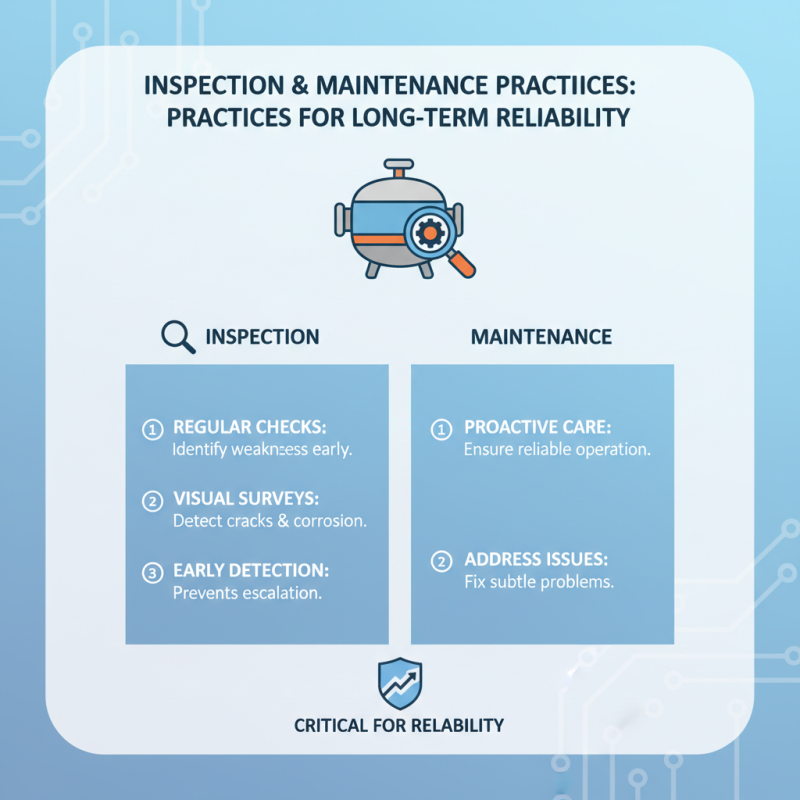
Inspection and Maintenance Practices for Long-term Reliability
Inspection and maintenance are critical for the reliability of pressure vessels. Regular inspections help identify potential weaknesses before they lead to failure. Visual inspections can reveal surface cracks or corrosion. These issues are often subtle at first but can escalate over time.
Scheduled maintenance is essential to uphold long-term performance. This might include replacing worn parts or employing advanced non-destructive testing methods. These methods, like ultrasonic testing or radiography, assess the internal structures without causing damage. Establishing a routine can help ensure that all areas are covered, but many facilities still lack these practices.
It's important to document all inspections and maintenance activities. This documentation provides a reliable history of the vessel's condition and interventions. However, many organizations may overlook this step, making it harder to track performance trends. Continuous reflection on these practices can uncover gaps in safety measures. Striving for improvement often leads to enhanced efficiency and safety.