Choosing the right Chemical Storage Tank affects safety, operating costs, and daily production reliability. Manufacturers and suppliers offer tanks in polyethylene, fiberglass, carbon steel, stainless steel, and specialized lined materials. Each option responds differently to temperature, pressure, concentration, and outdoor exposure. The correct selection begins with the stored chemical, required capacity, installation location, and maintenance plan.
Pricing can vary widely. A small polyethylene tank may suit a water-treatment facility, while a large stainless steel unit may support industrial processing. Wall thickness, fittings, internal coatings, heating systems, sensors, and transport requirements can change the final quotation. Experienced buyers should compare complete specifications, not only the advertised tank price. A low initial cost may create higher inspection or replacement expenses later.
This guide examines leading Chemical Storage Tank manufacturers, dependable suppliers, and practical price considerations. It also considers production quality, testing procedures, documentation, delivery support, and after-sales service. Reliable manufacturers should explain material compatibility and provide clear drawings, certifications, and installation guidance. Site experience matters. A tank that performs well indoors may fail prematurely under strong sunlight or uneven foundations. No single tank fits every site. Even careful recommendations can miss local conditions, so buyers should verify chemical data and operating limits with qualified engineers. Supplier claims deserve questions. This article aims to make those questions easier, helping readers compare options with greater confidence and fewer costly surprises.
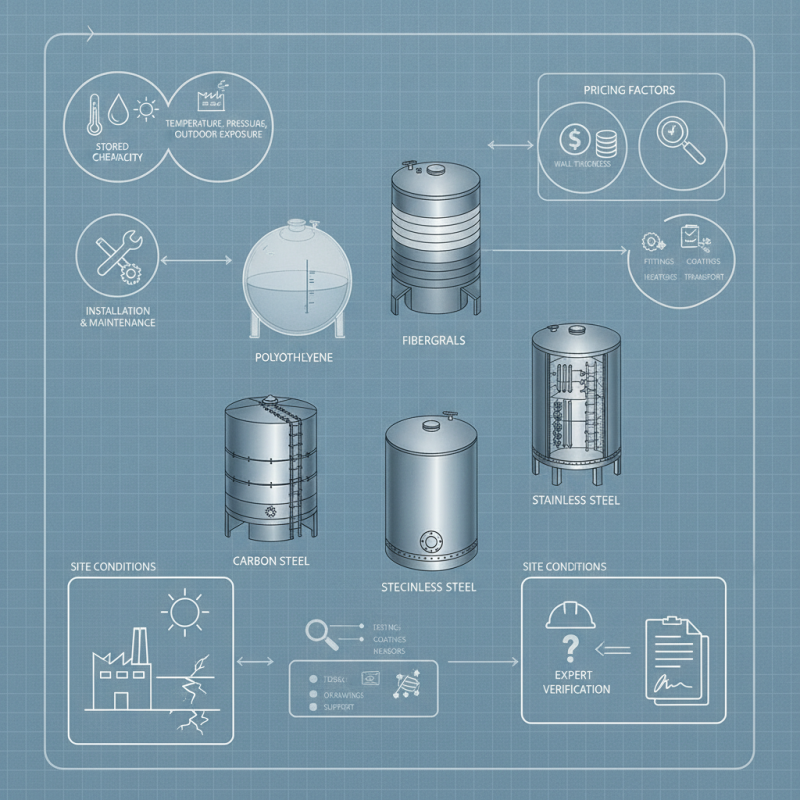
Chemical storage tanks protect liquids from contamination, leakage, heat, and pressure changes. They serve chemical plants, water treatment facilities, laboratories, agriculture, and manufacturing sites. According to Grand View Research’s 2024 market analysis, the global chemical storage tank market is projected to grow steadily through 2030. That growth reflects stricter safety expectations and expanding chemical production. Yet market growth alone does not guarantee safe storage.
Material selection controls tank performance. High-density polyethylene resists many corrosive chemicals and suits moderate temperatures. Fiberglass-reinforced plastic offers strong corrosion resistance with lower weight. Stainless steel handles demanding conditions, but it costs more and may still require compatible linings. Designers must check chemical concentration, temperature, density, vapor pressure, and filling frequency. The American Petroleum Institute’s API 650 standard emphasizes structural design, inspection, and testing for welded storage tanks. However, API 650 is not suitable for every chemical service. That assumption can fail.
Tips: Request a compatibility chart before purchasing. Add secondary containment, level monitoring, overflow protection, and visible labeling. Inspect vents, seams, valves, and supports regularly. The U.S. Environmental Protection Agency’s 2022 TRI National Analysis reported 29.9 billion pounds of production-related chemical waste managed by covered facilities. This figure highlights the importance of controlled handling, even when tanks are not the final waste destination. Keep inspection records. Small gaps become expensive problems.
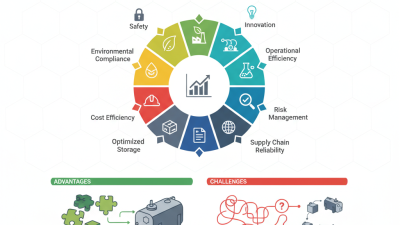
Chemical storage tanks are selected by chemical compatibility, capacity, temperature, and site conditions. Atmospheric vertical tanks suit bulk liquids such as acids, alkalis, and process solutions. Horizontal tanks can fit beneath low-clearance areas. Double-wall designs add leak detection and secondary protection. Smaller day tanks support controlled dosing near equipment, but they require careful ventilation and overflow planning.
High-density polyethylene is lightweight, corrosion resistant, and practical for many aqueous chemicals. Polypropylene handles higher temperatures and aggressive process liquids, although sunlight and impact can shorten its service life. Fiberglass-reinforced plastic offers strong chemical resistance with useful structural rigidity. Its resin must match the stored chemical. Steel tanks provide mechanical strength, while linings or stainless steel interiors improve corrosion resistance. Material selection should include concentration, temperature, mixing, and cleaning chemicals, not just the product name.
A reliable supplier should provide compatibility data, weld or laminate details, pressure limits, fittings, and inspection records. Ask how the tank was tested before delivery. On site, check the foundation, anchors, vents, gauges, and secondary containment. A minor fitting mismatch can become a serious maintenance problem. Price comparisons are meaningful only when accessories, delivery, installation, and monitoring are included. Universal material claims deserve skepticism. A simple chart may mislead after heating, outdoor exposure, or chemical dilution. Review the specification with an experienced engineer.
Approximate practical temperature limits for commonly used chemical storage tank materials. Actual limits depend on chemical concentration, exposure time, tank design, and operating conditions.
Polyethylene and PVC are widely used for ambient-temperature chemical storage because of their corrosion resistance and relatively low cost. Polypropylene and fiberglass-reinforced plastic generally support higher temperatures, while carbon steel and stainless steel are selected when higher mechanical strength or elevated-temperature service is required. Material compatibility must always be verified for the specific chemical.
Leading chemical storage tank manufacturers and suppliers support facilities that handle corrosive, reactive, or temperature-sensitive liquids. Their work starts with process details, not a catalog photograph. A reliable supplier asks about chemical concentration, density, operating temperature, tank volume, and site access. It also reviews loading cycles, ventilation, secondary containment, and cleaning procedures. Small omissions matter. A tank may look suitable yet fail under daily stress.
Experienced manufacturers commonly offer tanks in polyethylene, fiberglass-reinforced plastic, stainless steel, or lined steel. The correct material depends on compatibility data and actual service conditions. Thickness, fittings, supports, and level indicators require practical engineering review. Suppliers with documented testing, traceable materials, and clear inspection records are easier to evaluate. Ask for drawings, warranty limits, installation requirements, and maintenance guidance before purchasing. Price alone can mislead. A cheaper vessel may need costly modifications or replacement parts.
Chemical storage tank prices vary with capacity, material, fabrication method, certification, transport, and accessories. Transparent quotations separate the tank from pumps, valves, sensors, platforms, and delivery. This makes comparisons more honest. Field experience still matters. Ask whether technicians have handled similar temperatures, concentrations, and installation constraints. I would also check supplier response time after delivery, because support often matters when plans change. No design is perfect. A careful review of weak assumptions can prevent leaks, downtime, and unsafe maintenance work.
Chemical storage tank prices rarely follow a simple size chart. A small polyethylene tank may cost less than a reinforced steel unit, but material suitability matters more than appearance. Chemical concentration, temperature, density, and exposure time affect the specification. A tank holding mild liquid at room temperature needs different protection from one facing heat or corrosive vapors. Experienced buyers request a written chemical compatibility review before comparing quotations. This step prevents false savings and costly replacement.
Manufacturing method also changes the price. Rotational molding, welded fabrication, and lined construction require different labor, equipment, and inspection. Extra fittings, level gauges, mixers, ladders, insulation, and secondary containment add measurable costs. Delivery distance, packaging, installation access, and testing can influence the final invoice. Ask suppliers to separate tank, accessories, freight, installation, and maintenance. That format exposes missing items. A low quote may simply exclude essential details. No estimate is perfect. Recheck assumptions.
Tips: Define capacity using working volume, not total volume. Share the exact chemical name and operating range. Request material certificates, drawings, pressure or vacuum limits, and inspection records. Compare warranty terms carefully. Site conditions deserve attention, too. A narrow doorway or uneven foundation can increase installation costs unexpectedly. Independent engineering review is useful for critical storage systems, especially when several tanks operate together.
Selecting a chemical storage tank starts with the chemical, not the advertised price. Check concentration, temperature, density, and compatibility with materials, fittings, gaskets, and valves. A liquid that seems mild can damage an unsuitable liner over time. Ask for compatibility charts and written test data. Do not rely on appearance alone. Inspect welds, seams, supports, and access covers before installation. Tanks should sit on a level, reinforced base with enough clearance for maintenance. Small details matter.
Capacity should match actual demand, delivery cycles, and emergency operating needs. Avoid filling a tank to its maximum rated volume. Thermal expansion and surge space need room. Secondary containment is essential where leaks could reach soil or drains. Consider bund capacity, leak detection, overflow protection, ventilation, and safe connection points. In operating facilities, clear labels and readable level indicators help prevent hurried mistakes. A simple sight gauge may be useful, but it still needs regular verification.
When comparing manufacturers and suppliers, request drawings, material certificates, pressure or vacuum limits, inspection records, warranty terms, and replacement-part availability. Compare delivered cost, installation, cleaning, monitoring, and disposal expenses, not only the quotation. The cheapest tank can become expensive after one failed valve or unplanned shutdown. Ask how the supplier handles site measurements and technical questions. I would also check references from facilities using similar chemicals. Some decisions remain uncertain. A conservative design may cost more today, yet an oversized or poorly specified tank creates its own waste.
| Tank Type and Material | Typical Capacity Range | Common Chemical Applications | Typical Operating Temperature | Key Safety and Performance Characteristics | Relevant Standards and Design References | Indicative New Tank Price (USD) | Typical Supply Considerations |
|---|---|---|---|---|---|---|---|
| High-Density Polyethylene (HDPE), Single-Wall | 500–20,000 L | Sodium hypochlorite, dilute acids, alkaline solutions, water-treatment chemicals, detergents | Approximately -30 to 60°C, depending on resin, concentration, and tank design | Excellent corrosion resistance and impact resistance; lightweight; requires UV protection for prolonged outdoor exposure; not suitable for every solvent or high-temperature service | ASTM D1998; chemical compatibility data from the resin and tank manufacturer; local secondary-containment requirements | Approximately $700–$12,000 | Usually economical to transport and install; confirm wall thickness, specific gravity rating, fittings, venting, and compatibility before ordering |
| HDPE, Double-Wall | 1,000–20,000 L | Acids, caustic chemicals, oxidizers, fertilizers, and regulated liquid chemicals requiring leak detection | Approximately -30 to 60°C | Integrated secondary containment reduces spill risk; an interstitial leak-detection system is recommended; larger footprints and higher purchase costs than single-wall tanks | ASTM D1998; applicable local fire, environmental, and secondary-containment regulations | Approximately $2,000–$25,000 | Check the containment volume, leak sensor arrangement, access space, and whether the base and foundation are included in the quotation |
| Fiberglass-Reinforced Plastic (FRP) | 2,000–100,000 L | Hydrochloric acid, sulfuric acid at selected concentrations, sodium hydroxide, wastewater chemicals, and scrubber liquids | Approximately -20 to 65°C, depending on resin system and chemical concentration | High corrosion resistance and good structural strength; resin selection is critical; inspect laminate quality, nozzle reinforcement, and ultraviolet protection | ASTM D3299 for filament-wound chemical tanks; ASTM C582 for contact-molded FRP tanks; applicable site and structural codes | Approximately $3,000–$80,000 | Suitable for larger stationary installations; freight, lifting equipment, foundation work, and field assembly can substantially affect total cost |
| Polypropylene (PP) | 500–30,000 L | Acids, alkalis, plating chemicals, industrial process liquids, and laboratory or semiconductor chemicals | Approximately 0 to 90°C, subject to chemical concentration and mechanical design | Good resistance to many aggressive chemicals and higher temperature capability than HDPE; becomes less impact-resistant at low temperatures; welding quality is important | DVS 2205 and DVS 2207 welding guidance; chemical-resistance data; applicable pressureless tank design requirements | Approximately $1,500–$35,000 | Request details on plate thickness, welded seams, support structure, thermal expansion allowance, and factory leak testing |
| Carbon Steel with Chemical-Resistant Lining | 5,000–500,000 L | Large-volume acids, caustic solutions, process chemicals, and applications requiring high structural strength | Approximately -20 to 100°C, depending on lining material and chemical service | High mechanical strength and large-capacity capability; lining integrity is critical; damaged or incompatible linings can lead to rapid corrosion of the steel shell | API 650 for atmospheric welded tanks; ASTM F1545 for thermoplastic-lined ferrous metal tanks; lining manufacturer specifications | Approximately $15,000–$250,000+ | Often requires engineered foundations, cranes, coating inspection, holiday testing, and periodic lining inspection; installation costs may exceed the tank price |
| Stainless Steel 316L | 500–100,000 L | Selected acids, solvents, specialty chemicals, pharmaceutical ingredients, food-process chemicals, and high-purity liquids | Approximately -20 to 150°C, subject to design pressure, chemical concentration, and weld condition | Strong, cleanable, and suitable for hygienic applications; vulnerable to pitting or stress-corrosion cracking in some chloride environments; weld passivation may be required | ASME BPVC Section VIII for applicable pressure vessels; ASTM A240/A312 material specifications; sanitary design standards where required | Approximately $8,000–$200,000+ | Specify material certificate, surface finish, weld treatment, pressure or vacuum rating, insulation, heating, and applicable inspection documentation |
| Rubber-Lined Steel | 5,000–300,000 L | Selected sulfuric acid, hydrochloric acid, brine, slurry, and abrasive or corrosive process liquids | Approximately 0 to 95°C, depending on rubber formulation and chemical service | Excellent resistance for selected corrosive and abrasive liquids; lining must be inspected for pinholes, adhesion, and damage; avoid incompatible solvents and sharp mechanical impacts | ASTM F1545 where applicable; lining manufacturer specifications; project-specific inspection and holiday-testing procedures | Approximately $20,000–$300,000+ | Best suited to engineered projects; obtain documented lining thickness, spark-test results, repair procedures, and recommended inspection intervals |
Pricing note: The price ranges are indicative budget estimates for new, atmospheric chemical storage tanks and generally exclude freight, foundations, pumps, piping, instrumentation, installation, taxes, and permitting. Actual prices vary with capacity, chemical concentration, design temperature, fittings, certification, delivery location, and secondary-containment requirements.
Selection note: Before purchasing, verify chemical compatibility using concentration- and temperature-specific data, specify the required specific gravity and vacuum rating, provide suitable ventilation and overfill protection, and install secondary containment in accordance with applicable local regulations.